-

-
-
Loading
Loading

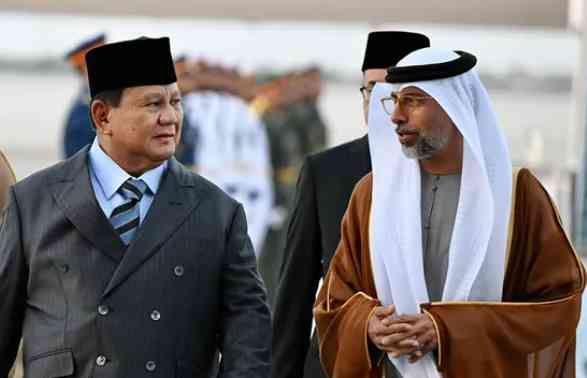
Media coverage regarding President Prabowo Subianto’s statements on Iran’s nuclear capabilities and Indonesia’s offer to mediate dialogue between South Korea and North Korea tends to be interpreted literally. Consequently, public discourse has focused primarily on debating the factual accuracy of these statements rather than understanding the broader strategic context being constructed.
In the study of diplomacy and international strategy, statements made by heads of state often serve functions far beyond the mere communication of empirical facts. Such declarations can function as instruments of strategic signaling—political messaging designed to influence the perceptions, calculations, and behaviors of other international actors.
Through this analytical framework, both of President Prabowo's statements can be understood in a fundamentally different light.
The Iranian Nuclear Program
Formally, there is no official recognition that Iran possesses operational nuclear weapons. The official position of the International Atomic Energy Agency (IAEA) maintains that Iran has enriched uranium up to approximately 60 percent—significantly above civilian requirements, yet below the roughly 90 percent threshold typically required for weapons-grade material. Furthermore, the IAEA has reported a reduction in inspection access to several Iranian facilities since 2021, thereby increasing uncertainty regarding the activity and trajectory of the program.
However, within international security literature, Iran’s status is frequently categorized as a nuclear threshold state. This implies that while Iran may not have formally declared the possession of a nuclear bomb, it has acquired the requisite technological capability, fissile material, and industrial infrastructure needed should a political decision to pursue weaponization be made.
Are there strategic grounds to infer that Iran has attained this capability?
Several key indicators support this premise:
Persistent Uranium Enrichment: Iran has maintained its uranium enrichment program despite facing severe economic sanctions for decades. This issue notably served as a primary sticking point that derailed recent peace negotiations mediated by Pakistan with the United States.Ballistic Missile Development: Iran continues to advance its medium- and long-range ballistic missile program. Under deterrence theory, the development of delivery systems holds significantly greater strategic value when coupled with potential nuclear capabilities.Regional Proxy Networks: Tehran has cultivated a network of regional proxies—including Hezbollah, Hamas, the Houthi movement, and various Shia militias in Iraq and Syria—allowing it to exert sustained strategic pressure across the region.
Explicit Statements by Iranian Officials: In recent years, several Iranian officials have publicly noted that the country possesses the technical capability to produce a nuclear weapon if needed, despite claiming that no political decision to do so has been taken.Saudi Crown Prince Mohammed bin Salman explicitly stated in a past interview that if Iran acquires a nuclear weapon, Saudi Arabia will follow suit. Such a statement is not mere rhetoric; rather, it reflects a classic security dilemma, as extensively articulated by scholars such as Kenneth Waltz and Scott Sagan.
In other words, the core issue is not simply whether Iran currently possesses a nuclear bomb, but whether neighboring states perceive Iran as an imminent nuclear threat. In international politics, the perception of a threat functions identically to the threat itself.
Korean Mediation: Why Not?
President Prabowo’s offer for Indonesia to act as a mediator between the two Koreas has similarly been perceived by critics as overly ambitious. However, from a historical standpoint, Indonesia possesses a unique diplomatic legitimacy. Indonesia remains one of the few nations that maintains formal diplomatic relations with North Korea while simultaneously fostering a strategic partnership with South Korea.
Moreover, Indonesian foreign policy has long adhered to the principle of an independent and active (bebas-aktif) foreign policy, as mandated by the Preamble of the 1945 Constitution. The constitution explicitly charges the state with participating in the establishment of a world order based on freedom, perpetual peace, and social justice. Therefore, proposing mediation is not a deviation, but a direct execution of a constitutional mandate.
Public perception often assumes that the Korean War has concluded. However, under international law, this assumption is incorrect. Hostilities ceased following the 1953 Korean Armistice Agreement, rather than a formal peace treaty. Consequently, the two Koreas remain legally in a state of war, merely paused by a ceasefire. This unresolved status ensures that any military incident on the Korean Peninsula carries the potential to escalate into a broader regional security crisis.
Why Indonesia is Relevant
Indonesia is not a superpower. However, international mediation theory does not dictate that mediators must be major powers. As Jacob Bercovitch demonstrated, effective mediators frequently emanate from states perceived as relatively neutral and acceptable to both conflicting parties.
When President Prabowo's statements are examined through the lens of strategic communication and international diplomacy, their significance diverges markedly from dominant media framings.
The statement concerning Iran need not be interpreted as an intelligence claim confirming that Iran possesses nuclear weapons. Instead, it can be understood as a form of strategic signaling that highlights the dangers posed by the ambiguity surrounding Iran’s nuclear program to Middle Eastern stability and regional proliferation—fully aligned with the logic of the security dilemma and the concept of the nuclear threshold state.
Similarly, Indonesia’s offer to facilitate dialogue between South and North Korea should not be dismissed as an ambition exceeding national capacity. The proposal is consistent with Indonesia’s constitutional mandate regarding global peace, sustained by its unique neutral standing, and rooted in the reality that the Korean conflict has never been formally concluded via a peace treaty. Within this analytical framework, the President’s statements are more accurately understood as an effort to reinforce Indonesia’s role as an active middle power in preventive diplomacy and conflict resolution.