-

-
-
Loading
Loading

JAKARTA — Have you ever heard economic observers warn about a "time bomb" in our state finances? They claim that the mounting debt of State-Owned Enterprises (SOEs) and the trillions of rupiah spent on the Free Nutritious Meal program could bankrupt the state budget (APBN) in the future.
Traditional economists call it a "hidden fiscal risk." They worry the government is playing with fire using the people's money.
However, let's look at this issue from a more grounded perspective. Imagine our country as a family. If this family only saves spare change and never dares to borrow capital for higher education or to start a business, they will never get rich. They will just be stuck in place.
That is what the government is doing right now. The swelling state expenditure is not a form of "wasting money," but rather a calculated gamble.
Free Meals: Brain Investment, Not Burned CashTake the Free Nutritious Meal program, often criticized for burdening the state. Many view it merely as consumable "social spending." Yet, looking deeper, this is the most logical investment the state can make.
Why? Because we are building the "engine" of the future: the brains of Indonesian children. Saving millions of children from stunting today is the only guarantee that tomorrow they will grow into smart, high-income workers. They are the ones who will later pay the large taxes to pay off state debts. So, this is a human resource investment, not just pocket money that vanishes into thin air.
If we dissect further, where do the trillions of rupiah from the Free Nutritious Meal (MBG) program actually go? The answer: the money doesn't flow into the accounts of giant corporations or evaporate overseas. It pours into the pockets of the lowest-income communities through a highly localized supply chain.
Imagine the process behind one plate of food served to school children every morning. The rice is bought from local farmers, the fish and eggs are absorbed directly from local fishermen and breeders, and the vegetables are supplied from residents' gardens.
Suddenly, our farmers and fishermen have a "permanent buyer" (the government) that buys up their harvests and catches every day at fair prices. They no longer need to cry over plummeting prices during peak harvest or being strangled by middlemen, because the market is certain and guaranteed.
This is what economists call the multiplier effect. When state money enters the wallets of farmers and fishermen, they spend it again at neighborhood stalls, buying clothes, or repairing houses. Those trillions of rupiah circulate and revitalize the economy at the village and sub-district levels, instead of just piling up in the capital.
Moreover, this program creates massive employment instantly. The presence of the Nutritional Distribution Service Units (SPPG) or public kitchens in every location requires a new workforce. This program absorbs housewives to become decently paid cooks, administrative staff, regional nutritionists, and village youth recruited as food delivery couriers using their motorcycles.
Therefore, calling the MBG merely a "budget burden" or "burned money" is a massive misconception that fails to see the big picture. Behind every plate of nutritious food for schoolchildren, the economic wheel of the common people is spinning very fast. In essence, this program is a giant-scale grassroots economic stimulus masquerading as a health program.
Cleaning Up SOE Debt through Danantara
Then, what about the massive SOE debt used to build toll roads, dams, and other infrastructure? That debt is indeed real and must be paid. However, the government is not turning a blind eye.
The latest move is the formation of the Daya Anagata Nusantara Investment Management Agency (Danantara). Simply put, Danantara is like a 'giant wallet' that consolidates all the wealth and assets of our SOEs into one massive power.
The goal is not to sweep debt under the rug, but to tidy up state assets so we have strong bargaining power. With assets managed professionally in one massive container, Indonesia can attract foreign investors more transparently and safely.
Breaking Free from Past Trauma
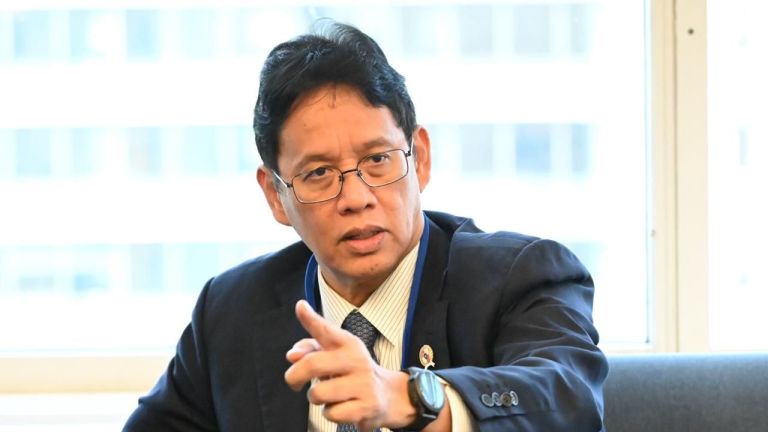
Dr. Piter Abdullah, a senior economist from the Segara Research Institute, notes that for the last 25 years since the 1998 monetary crisis, our government has always been haunted by trauma. We became overly cautious, stingy with spending, and afraid of debt. As a result, our economic growth has flatlined at 5 percent.
"If we want the economy to grow fast and leap forward, we must dare to take calculated risks. Opening the state's financial tap wider for productive things is natural for a developing country. Of course, there are risks, but that is the ticket price to be paid if Indonesia wants to become an industrialized nation," Piter explained.
Conclusion: Daring to Navigate the Waves
Hoping to have zero debt and absolute zero risk is a luxury only wealthy nations possess. For Indonesia, cowering in fear while dreaming of 8 percent economic growth is an illusion.
State financial risks do exist, but they shouldn't be feared to the point of halting development. Those risks must be measured, supervised, and conquered. With transparent oversight, our current APBN is not just a tool to survive from month to month, but the ultimate weapon to win the nation's future.