-

-
-
Loading
Loading

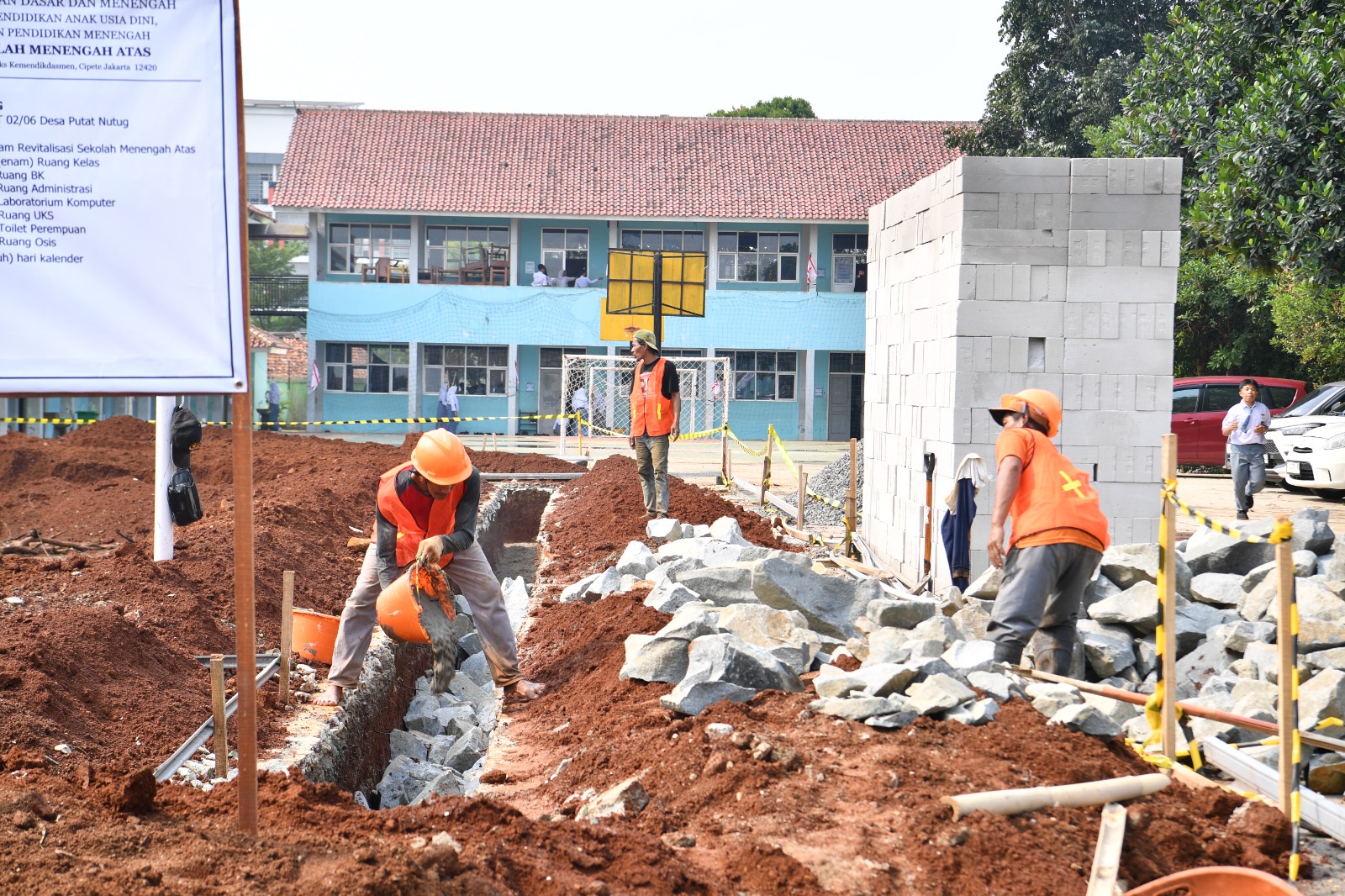
In the complex arena of public policy, grand national visions often struggle to survive the grueling transition from paper to pavement. For decades, the discourse surrounding Indonesia's education system has been dominated by debates over curriculum shifts and administrative bottlenecks, sometimes obscuring a fundamental truth: the physical environment in which our children learn dictates the quality of their future.
However, the recent initiative announced by the Ministry of Basic and Secondary Education—a commitment to revitalize 71,744 schools across the archipelago in 2026—signals a refreshing and profound shift in governmental strategy. This is not merely a routine infrastructure upgrade; it is a masterclass in institutional coordination and targeted socioeconomic intervention.
The Dual-Engine Policy: Education Meets Economic Stimulus
To view this policy strictly through an educational lens is to miss half of its brilliance. By deliberately involving 1.1 million people in the revitalization process, the government has transformed an educational necessity into a massive, grassroots economic stimulus.
In public administration, cross-sectoral impact is the holy grail of state budgeting. Here, the government is executing a dual-engine policy. On one side, it addresses the critical deficit in adequate learning facilities—repairing collapsing roofs, upgrading sanitation, and modernizing classrooms—ensuring that students in remote districts have the same dignified learning spaces as those in Jakarta.
On the other side, it directly injects capital into local economies. The mobilization of 1.1 million workers means jobs for local contractors, carpenters, and laborers. It stimulates demand for domestic construction materials, from cement to local timber, creating a multiplier effect that strengthens the economic resilience of communities recovering from broader global economic pressures.
Redefining Institutional Synergy
What makes this 2026 agenda particularly worthy of appreciation is the scale of administrative execution it demands. Managing the logistics of nearly 72,000 project sites requires an unprecedented level of institutional synergy between the central government, regional administrations, and local communities.
It is a testament to an evolving bureaucracy that is becoming more agile and results-oriented. The government is moving away from fragmented, siloed programs and instead embracing a holistic approach to statecraft. By decentralizing the workforce and trusting local hands to rebuild local schools, the state is reviving the traditional spirit of gotong royong (mutual cooperation) and institutionalizing it as a formal mechanism of public policy.
Securing the Demographic Dividend
As Indonesia navigates its path toward the "Golden Indonesia 2045" vision, the window to capitalize on our demographic dividend is narrowing. We cannot expect to mold world-class innovators, critical thinkers, and future leaders in dilapidated classrooms that communicate neglect.
The physical state of a school sends a silent but powerful message to the students within it about their worth in the eyes of the state. By prioritizing this massive revitalization, the Indonesian government is sending a clear, unequivocal message to millions of students: your future matters, and we are investing in the foundation of it.
Conclusion
Constructive criticism is the lifeblood of a healthy democracy, but it is equally vital to recognize and applaud when the state executes a policy of immense strategic value. The Ministry of Basic and Secondary Education’s 2026 revitalization program stands as a beacon of actionable, empathetic, and economically sound governance.
By simultaneously fixing our schools and empowering our workforce, the government is not just repairing buildings; it is actively engineering a stronger, more resilient Republic. This is the kind of substantive policy execution that deserves not only our appreciation but our full, collective support.